
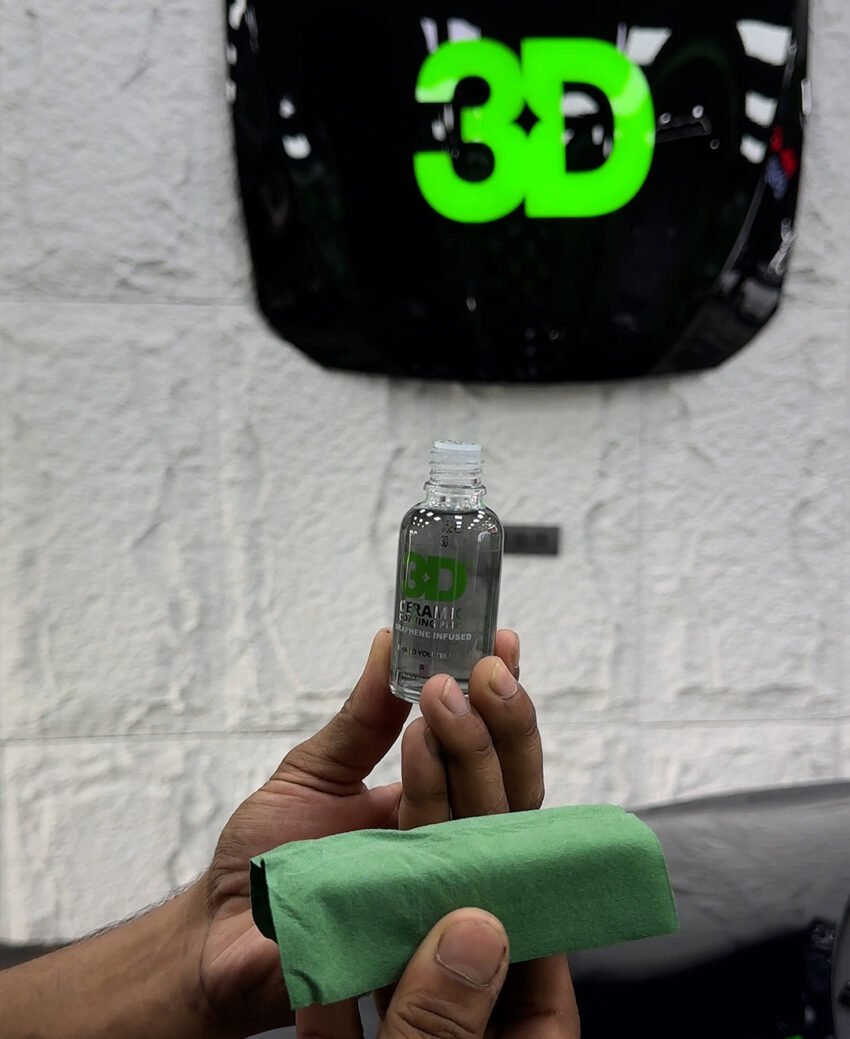
In recent years, car care technology has evolved significantly, with advanced protective solutions gaining popularity among vehicle owners. One such innovation is Graphene Coating for Cars, known for its durability, shine, and superior protective qualities. Among its standout features, hydrophobicity plays a crucial role in enhancing vehicle maintenance and appearance.
What is Hydrophobicity?
Hydrophobicity refers to the ability of a surface to repel water. When a surface is hydrophobic, water does not spread across it but instead forms beads that easily roll off. This effect not only keeps surfaces dry but also helps in removing dirt, dust, and contaminants along with the water droplets.
In the context of automotive protection, the hydrophobic coating forms a slick layer on the surface of the car so that the water and other dirt do not adhere. This is where Graphene Coating for Cars can be seen as a solution of the next generation.
How Graphene Enhances Hydrophobic Properties
Graphene is a single sheet of carbon atoms in a hexagonal structure or conformation, which is strong, flexible, and conductive in nature. Using graphene as a coating material improves the surface characteristics of a car such as making it hydrophobic.
Graphene Coating for Cars has better water repelling characteristic than traditional ceramic coating because the molecular structure is tightly packed. This type of structure decreases the energy of the surface such that the water and contaminant may not stick well. Consequently, this makes water form beads that float immediately and move on with ease.
Benefits of Hydrophobicity in Graphene Coating
Easy Cleaning and Maintenance
One of the biggest advantages of hydrophobic surfaces is that they stay cleaner for longer. Dust, mud, and bird droppings are less likely to stick, making washing quicker and less frequent.
Protection Against Water Spots
Stains caused by hard water may ruin the paint of a car with time. With Graphene Coating for Cars, water droplets roll off before they can evaporate and leave behind mineral deposits.
Enhanced Gloss and Shine
The hydrophobic layer is making the car have a sleek glossy finish. The glass-like texture is more reflective, which gives the car a showroom-like appearance.
Resistance to Environmental Contaminants
These are acidic elements and contaminants that are usually carried by rainwater. The paint is bonded to a hydrophobic layer of graphene so that these substances do not form on the paint and the car is not spoiled.
Improved Longevity of the Coating
Graphene coatings have been known to be durable. They have long-lasting performance because of their hydrophobic properties in contrast to the traditional coatings, thus maintaining consistency.
Why Choose Graphene Over Traditional Coatings?
Although ceramic coatings also provide hydrophobic properties, Graphene Coating for Cars goes a notch higher in that it is more resistant to heat, chemicals and water spots. Its high formulation makes sure that even the hydrophobic effect does not deteriorate easily even under harsh environmental conditions.
Graphene coating also has the benefit of eliminating the issue of statically build ups, therefore, less dust is collected on the vehicle, as is usually the case with most vehicles.
Conclusion
Hydrophobicity is a key feature that makes modern car coatings highly effective, and graphene technology elevates this benefit to a new level. Graphene Coating for Cars repels not only water but also nuts and grime and prevents corrosion as well as beautifying the vehicle in the long run. This high-quality coating solution can be a good and price-worthy choice for all car owners who want to have the durable shine and protection.